
On 12 August 2026, Catalonia successfully celebrated a historic day of total solar eclipse observation. Beyond the astronomical spectacle, the event left an important scientific and social legacy.
More than 3,000 people registered for the SOLARIS citizen science project - promoted by the Department of Research and Universities of the Generalitat de Catalunya, in collaboration with the Vall d'Hebron Institute of Research (VHIR) and the Institut d'Estudis Espacials de Catalunya (IEEC).
The data collected will allow researchers to analyse possible variations in heart rate, breathing, physical activity and other biometric indicators, as well as their relationship with the emotions triggered by observing totality. Research teams will now begin the process of processing and analysing the information.
This project represents a milestone for OneCareAI: demonstrating that its wearable technology and app, originally developed for cardiac monitoring and stroke prevention, can be deployed at scale for citizen science - with thousands of simultaneous users capturing real biometric data during a unique natural event.
El 12 de agosto de 2026, Catalunya vivió con éxito una jornada histórica de observación del eclipse solar total. Más allá del espectáculo astronómico, el evento dejó un importante legado científico y social.
Más de 3.000 personas se inscribieron al proyecto de ciencia ciudadana SOLARIS - impulsado por el Departament de Recerca i Universitats de la Generalitat de Catalunya, en colaboración con el Vall d'Hebron Institut de Recerca (VHIR) y el Institut d'Estudis Espacials de Catalunya (IEEC).
Los datos recogidos permitirán analizar posibles variaciones en la frecuencia cardíaca, la respiración, la actividad física y otros indicadores biométricos, así como su relación con las emociones provocadas por la observación de la totalidad. Los equipos investigadores iniciarán ahora el proceso de tratamiento y análisis de la información.
Este proyecto representa un hito para OneCareAI: demuestra que su tecnología wearable y su app, desarrolladas originalmente para la monitorización cardíaca y la prevención del ictus, pueden desplegarse a escala para la ciencia ciudadana - con miles de usuarios simultáneos capturando datos biométricos reales durante un evento natural único.
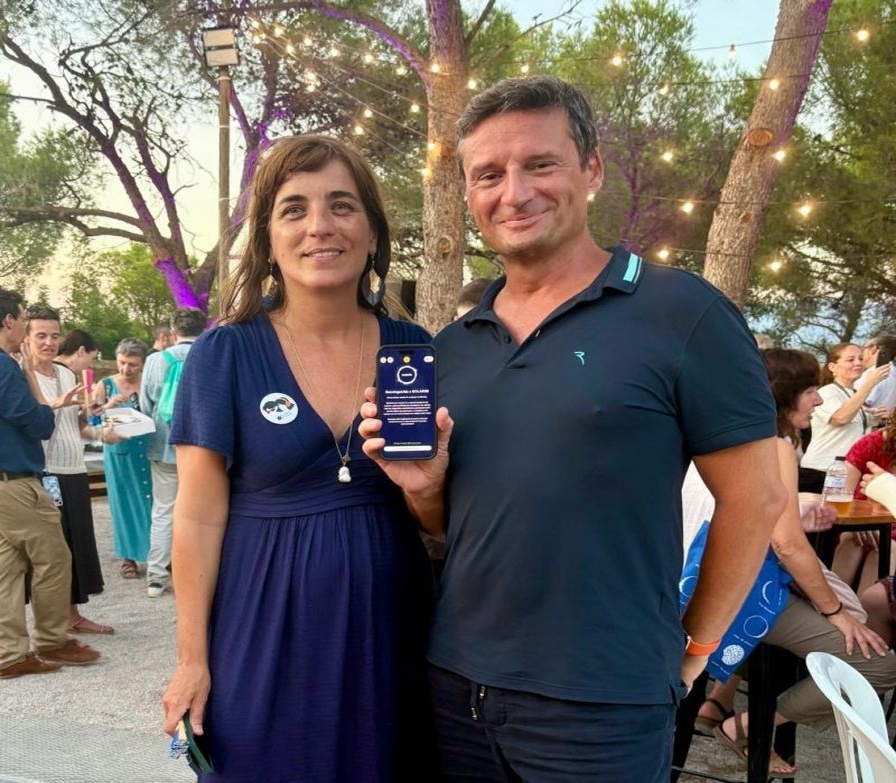
The SOLARIS app was available for iOS and Android, and participants used their smartwatches to record biometric data in real time. The simplicity of participation - just download, register and wear your watch - enabled broad, diverse engagement across the region.
The research teams from VHIR and IEEC, together with OneCareAI, will now work on the analysis of the data collected. Results are expected to provide novel insights into how a rare astronomical phenomenon affects human physiology and emotion at a population scale.
La app SOLARIS estuvo disponible para iOS y Android, y los participantes utilizaron sus relojes inteligentes para registrar datos biométricos en tiempo real. La sencillez de participación - solo descargar, registrarse y llevar el reloj - permitió una participación amplia y diversa en toda la región.
Los equipos de investigación del VHIR y el IEEC, junto con OneCareAI, trabajarán ahora en el análisis de los datos recogidos. Se espera que los resultados aporten nuevas perspectivas sobre cómo un fenómeno astronómico único afecta la fisiología y las emociones humanas a escala poblacional.